Contributors include:
Geraldine Coates, Christopher Hayman, The Hayman Family Archives, Other UK Corporate and Public Archives

A LONG AND ILLUSTRIOUS TRADITION
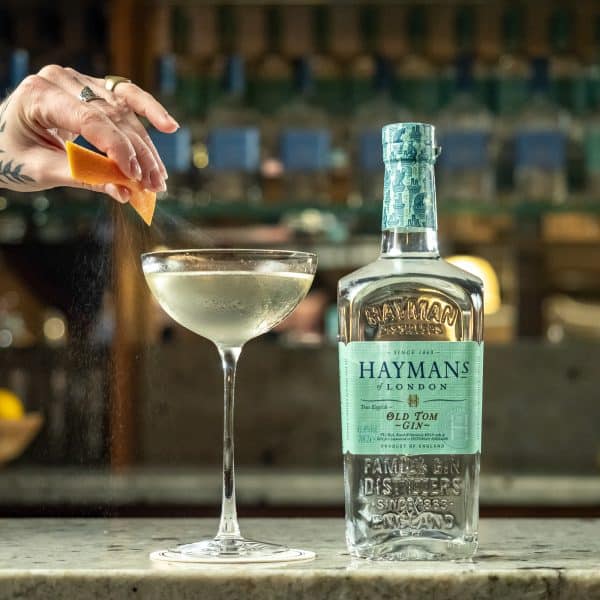
Hayman's Old Tom Gin is a return to the authentic gin of 19th century London
and is deeply rooted in the tradition of quality preserved by the great names
of English distilling. It is made by the longest serving family owned gin
distiller in England. The tradition of Old Tom Gin is of a rich and rounded
profile of gin flavours with a light sweetness. It was and is a very much
more botanically intensive than the styles of gin that both preceded and followed,
lending a distinguished character to the mixed drinks that called for it.
Just as it's profile stands apart, so does its colourful history.
As the 19th century advanced distilling techniques improved and London became
a distilling hub with the industry concentrated into a number of prestigious
companies, many of whom are still around today. In 1862 they were joined by
James Burrough, the creator of Beefeater Gin and Great Grandfather of Christopher
Hayman, of Hayman Distillers.
CATS,
MYTHS AND LEGENDS
Legend has that Old Tom Gin got its name from the entrepreneurial practices
of a certain Captain Dudley Bradstreet. In 1736 Bradstreet acquired a property
in London and a stock of gin. He set up a painted sign of a cat in the window
and spread the word that gin could be purchased 'by the cat'. Under the cat's
paw sign was a slot and a lead pipe, which was attached to a funnel inside
the house. Customers placed their money in the slot and duly received their
gin. Bradstreet's idea was soon copied all over London. People would stand
outside houses, call 'puss' and when the voice within said 'mew' know that
they could buy bootleg gin inside. Very soon Old Tom became an affectionate
nickname for gin.
Joseph
Boord was the first distiller to register the image of a cat in his 1849 Cat
and Barrel trademark for Old Tom Gin, which was also the earliest registered
trademark for gin. Once branded bottles came in the 1890s, bottles of Old
Tom Gin invariably carried an illustration of a black cat. Boord offered a
different story for the product's origin, claiming under oath that the product
was named for an "Old Tom" who worked at another distillery. The
1903 challenge to Boord's mark with the cat and barrel became a landmark case
in UK trademark law.
EMPIRE OF THE SWEET
For generations a cornerstone of the British Empire, the sugar trade in the
19th century had its largest trading hub in London. In 1802 an entire new
section of the Port of London, the West India Docks (see illustration below),
was built to process the vast amounts of sugar arriving from British colonies
in the Caribbean. Increasingly numerous and large refiners made sugar readily
accecessible and affordable to many London trades, including distillers who
required copious amounts for a broad range of products. Evidence of this sweet
tooth was the increasing appeal and production of cordials and presence of
sweet across a broad range of spirits, including Old Tom Gin.
THE
MYSTERY WITHIN
The lack of regulation and relative product consistency across distilillers
in early 19th century gin production yielded some very diverse, interesting
and sometimes dangerous products on the market. Town and Country, addition
of acids, now prohibited ingredients, accidental aging.
TASTE AND PRODUCTION
In taste terms 19th century Old Tom Gin is often described as the missing
link between Dutch genever and London Dry Gin, with the rich mouth feel of
its predecessor and a fuller, rounded profile of botanicals found in its successor.
Even more so than with modern gins, the taste profiles of different distillers'
Old Tom Gins would have varied greatly because each distiller had his own
recipe, production capabilities and technique. However what every distiller
was aiming for was a balance between the rich flavours of the gin botanicals
and sweetness derived from 2% to 3% of sugar. At the beginning of the 19th
century Old Tom was around 25% ABV, sold in barrels and drunk neat like a
liqueur. By the late 19th century Old Tom gins were usually bottled at between
40 and 44% ABV.
The Old Tom of the late 19th century was held as the benchmark of quality
for English Gin, and led in exports within the gin category. Advances in distillation
and water treatment over the 19th century enabled creation of a cleaner and
more flavourful Old Tom, further broadening its audience.
OLD
TOM EVOLVES WITH DISTILLATION
The world of gin in the early 19th century could be characterized as highly
fragmented and without much order or consistency to the pot-still distillates
of the day. Hundreds of small distilleries rushed product for sale to local
taverns for consumption, often with an expediency that bore little regard
for product quality. Needless to say that aging was not a consideration. Early
Old Tom was typically sweetened because the popular taste was for sweeter
spirits and, in better distillate, for adding to the complexity of flavours.
It was an era when sugar and sweet goods were increasing accessible to the
common man.* In lesser distillates and compounded gins, the sugar may well
have been the focal point beyond delivery of alcohol. While aromatic esters
of the pot still distillate may have been interesting, Old Tom didn't ascend
in popularity until the introduction of the continuous still allowed for a
cleaner neutral spirit as the Old Tom Gin's base.
By the 1870s continuous distillation in a column still was widespread which
allowed for a significant and dramatic enhancement in the quality of the products
made by distillers. In addition to a massive range of liqueurs, punch essences,
cordials and fruit gins, most distillers also produced three different types
of gin:
Old Tom Gin: Rich, rounded and flavourful, often advertised as 'sweetened
gin', further heightening its appeal. Unaged, and sometimes containing unique
botanicals.*
London Dry: 'London' because most of the distillers making it were
based in London. 'Dry' because it was unsweetened, often described on distillers'
price lists as 'sugar free' gin. It became a darling to gin producers as it
required less botanical inputs and no sugar, cost effective and with appeal.
Hollands and Geneva: Hollands was a direct copy of Dutch genever and
was usually aged, Geneva was the English version of Dutch genever, lighter
in style and unaged. Relative to Old Tom and especially London Dry, the Hollands
and Geneva were the least juniper intensive.
English Gins were now the drink of the middle classes particularly after the
phylloxera plague had made French brandy almost unavailable. From the the
1870s to the end of the century, Old Tom Gin was the dominant style and became
an important export particularly to the United States where it was seen as
more versatile alternative to the heavier Dutch gins.
THE GLORY DAYS OF OLD TOM
The period between the 1880s and the 1920s was the Golden Age of Cocktails,
a time of great innovation when a new American invention, the cocktail and
a broad class of mixed drinks, became glamorous and sophisticated. Led by
the first celebrity bartenders such as the famous 'Professor' Jerry Thomas,
the fashion for drinking sweet mixed drinks spread throughout Europe and every
grand hotel had its American Bar serving a wide range of 'fancy' drinks, slings
and cocktails.
And Old Tom Gin was the star of the show. Harry Johnson's famous "Bartender's
Manual" of 1882 listed it as an 'essential liquor required in the bar
room'. Old Tom featured by name in the great creations of the day and is specified
in the first written recipes for the Martinez, a precursor of the Martini
made with Old Tom Gin and sweet red vermouth, as well as the Martini itself,
the Tom Collins, the Silver Fizz, the Ramos Gin Fizz, the Gibson Girl and
many others.
Old Tom and London Dry Gin were popular on both sides of the Atlantic until
around 1910, but by the 1920s Dry Gin had overtaken the Old Tom style both
at home and abroad. London Dry grew more prominent as both its available supply
and market demand outpaced that of Old Tom. By taste, the sharpness of Dry
Gin found appeal in some of the most popular gin drinks, including the Dry
Martini and the Bronx. .Successive wars and economic strife affected the production
costs and output of Old Tom, always more expensive to produce than London
Dry. At the same time, it's market demand relative to London Dry was adversely
affected by a lesser perception of alcohol potency to both the speakeasy drinker
and later the ultra dry martini crowd. Nonetheless demand for Old Tom continued
and many major distillers made it until the 1960s when it virtually disappeared.
Today, with a new generation of bartenders taking interest in the classic vintage
mixed drinks, the call for Old Tom Gin has started to return. While it's predominance
in the market may never again match that of the late 19th century, it's not
without a touch of great pride for this distiller to see an ever increasing
diversity of gin profiles available again.
HAYMAN DISTILLERS AND HAYMAN'S OLD TOM GIN
The original company of Hayman Distillers was founded in 1820 and acquired
in 1863 by James Burrough, the great Grandfather of the current Chairman,
Christopher Hayman. James Burrough created the world renowned Beefeater Gin.
Although Beefeater Gin and James Burrough Limited were sold to Whitbread in
1987, the Hayman family retained part of the business and continued the tradition
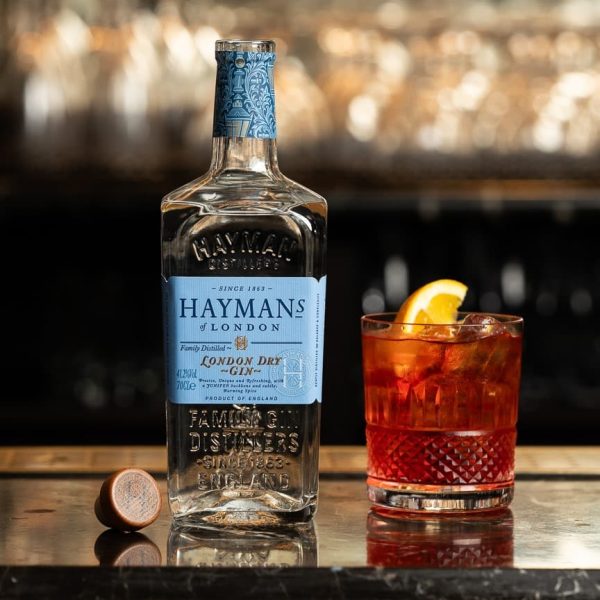
of distilling and blending Gin and the production of other spirits. Hayman's Old Tom Gin
is produced from an original Old Tom gin recipe in the Hayman family archives.
"James Burrough, my Great-Grandfather, produced an Old Tom Gin in
the 19th Century and I am delighted to be following in his footsteps and reviving
this old but not forgotten style of Gin"
Christopher Hayman, Chairman, Hayman Distillers
Hayman's Old Tom Gin holds true to the tradition of a rich and rounded profile,
a botanically intensive gin with a delicate sweetness. It's lovely bouquet
and depth of flavours makes Hayman's Old Tom the ideal choice for perfecting
so many classic gin mixed drinks.
Thank you for reviewing this initial draft of our Primer. We have additional
notes, photos and sections we anticipate adding in late July 2009.
Imported into the USA by Haus Alpenz USA, Manhasset NY
www.alpenz.com
For other countries, please contact distillers@hayman.co.uk